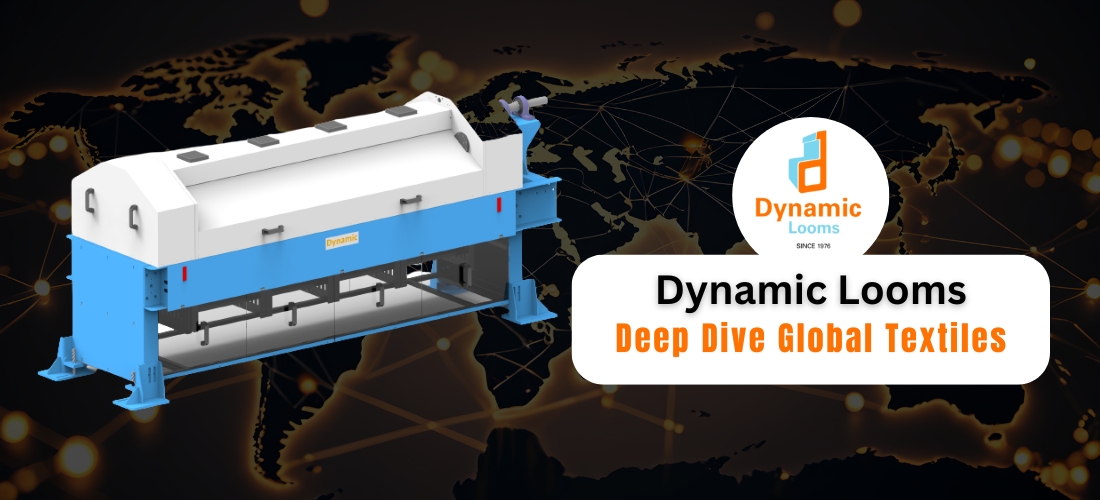
In a time when the textile and fabric industry is evolving rapidly under pressure from sustainability demands, technical textile growth, Industry 4.0 innovations, and shifting global supply-chains, having the right weaving technology is more critical than ever. Dynamic Looms, with its range of rapier looms, electronic jacquards, shuttle looms, let-off/take-up systems and special-purpose machines (SPMs), is well-positioned to serve manufacturers aiming to stay competitive.
Let’s explore the modern textile landscape, the major global trends shaping it, and how Dynamic Looms’ offerings connect directly to these shifts.
Global / Industry-Wide Trends Reshaping Textiles
Before we dive into the products, here’s a macro-view of what’s changing in textiles:
1. Explosive Growth of Technical & Functional Textiles
- The global “technical textiles” market (i.e. industrial, non-apparel, high-performance fabrics) is forecast to reach USD 241.5 billion by 2035, with steady growth driven by demand from healthcare, automotive, infrastructure, filtration, packaging and many other sectors.
- Demand is shifting away from mere fashion and apparel toward performance durability, strength, chemical/thermal resistance, filtration capability, and application in industrial or engineering domains.
2. Sustainability, Circular Economy & Environmental Pressure
- Sustainability is no longer optional: environmental regulations, consumer expectations, and brand commitments make resource-efficient, low-waste, and eco-friendly production essential.
- Circular models like recycling, fiber-to-fiber reuse, and responsible material sourcing are increasingly mainstream.
- There is pressure to reduce water use, energy consumption, and chemical waste, particularly in fabric production and finishing.
3. Industry 4.0, Digitalisation & Smart Manufacturing
- Textile manufacturing is adopting digital manufacturing, automation, real-time monitoring, predictive maintenance, IoT sensors, and data-driven quality control.
- This transition enables higher throughput, lower error rates, better consistency, efficient changeovers, and reduced labor dependency.
4. Supply-Chain Resilience & Near-Shoring / Diversified Sourcing
- Global events (geopolitics, pandemic disruptions) have motivated brands to diversify suppliers, bring production closer to demand regions, shorten lead times, and reduce dependency on distant supply chains.
- As demand for specialized and small-to-medium batch production rises (technical textiles, custom industrial fabrics, specialty orders), flexible, efficient weaving equipment becomes more valuable than large-scale, monolithic setups.
5. Demand for High Quality, Customization & Product Diversification
- As consumers and industrial buyers demand more function-driven fabrics (e.g. filtration media, HDPE nets, glass-fibre fabrics, reinforced textiles), producers must be able to supply a wide range of fabric types beyond traditional apparel or home-textiles.
- Flexibility in design, ability to weave complex patterns, heavier yarns, or multi-layer / technical fabrics all add value and open new markets.
How Dynamic Looms’ Products & Services Align with These Trends
Given the global shifts above, here is why the machinery and services of Dynamic Looms make sense and why manufacturers working across apparel, technical textiles, industrial fabrics, or specialty segments should take notice.
Modern Rapier Looms Versatility & Efficiency
- Dynamic Looms offers flexible rapier looms (e.g. models like Shiva DR II Plus, Magic E7 for Gauze, etc.), covering a wide working width range.
- Rapier looms are globally recognized as core weaving equipment for a broad spectrum of fabrics: from cotton apparel and home-textiles to industrial and technical fabrics.
- Compared to traditional shuttle looms, rapier looms significantly increase production speed; some modern looms can exceed 500 weft insertions per minute, substantially boosting throughput.
- Energy consumption and environmental footprint drop, because rapier looms avoid water-jet or air-jet inefficiencies; they consume less electricity and don’t depend on water (useful in water-scarce regions).
- Lower noise, lower maintenance, and stable tension control all contribute to better working conditions, fabric quality, and cost-effective production.
- For manufacturers transitioning to technical or industrial textiles, the flexibility and robustness of rapier looms allows them to handle heavier yarns, mixed materials, or specialized fabric structures.
Impact: If you run a textile mill, upgrading to modern rapier looms from Dynamic Looms can yield higher output, lower operational costs, and greater flexibility in fabric type ideal for both traditional cloth and newer technical textile demands.
Electronic Jacquards & Digital Weaving For Design Complexity and High-Value Fabrics
- Dynamic Looms’ catalog includes multiple electronic jacquard models (from 1408-hook to 5376-hook “jumbo” jacquards), compatible with rapier and shuttle looms, enabling complex pattern weaving at high speeds.
- Electronic jacquard systems automate warp selection and patterning, enabling intricate designs, complex textures, decorative fabrics, or technical weaves impossible or very slow with manual systems.
- This automation reduces material waste, reduces labor requirements, and ensures consistent fabric quality crucial for both fashion/home-textile markets (patterned fabrics, upholstery) and technical segments.
- For industrial buyers looking for customized solutions (e.g. technical mesh, HDPE/HTPP nets, filtration media, high-density weaves), electronic jacquards and modern looms bring precision and repeatability, ensuring product standards and output consistency.
Impact: Enables manufacturers to deliver high-end, high-complexity textiles from luxury home décor to industrial-grade technical fabrics with consistency and efficiency, expanding market reach substantially.
Electronic Let-Off & Take-Up Systems, Tuck-In Devices, SPM Machines For Process Control and Specialized Fabrics
- Dynamic Looms offers electronic let-off & take-up (ELO & ETU) systems, as well as tuck-in devices and special-purpose machines (SPMs).
- Such automation ensures precise control over fabric density, tension, and roll-up critical when weaving technical fabrics, high-density weaves, or specialty substrates.
- For industrial and technical applications, consistent fabric properties (density, uniformity, mechanical strength) are non-negotiable. Electronic control helps meet those requirements.
- Special-purpose machines allow weaving of non-standard materials (metal wire mesh, monofilament, glass fibre, heavy-duty industrial netting) expanding the fabric types beyond traditional cotton or polyester cloth.
Impact: This opens the door for mills to diversify business beyond apparel and home textiles into industrial, construction, filtration, packaging, and other technical textile segments. It gives flexibility to adapt to market demand and tap higher-margin sectors.
What This Means? Business & Market Implications for Manufacturers and Buyers
- Diversified Revenue Streams:
Modern, flexible looms enable mills to serve apparel, home-textile, and technical-textile markets reducing risk and dependence on any single segment. - Cost Efficiency & Sustainability:
Lower energy use, reduced waste, and efficient operation improve profit margins and help manufacturers meet global sustainability expectations. - Readiness for Rising Global Demand:
Advanced looms position mills to tap into the fast-growing technical textiles market (industrial, healthcare, filtration, automotive), projected to reach USD 241.5 bn by 2035. - Flexibility & Future-Proofing:
Modern equipment allows quick adaptation to new trends such as smart textiles, customization, and recycled-fiber manufacturing without major rebuilds. - Competitive Advantage for Near-Shoring Buyers:
Manufacturers with advanced machinery are more attractive to brands reshoring production for faster lead times, transparency, and supply-chain resilience. - Higher Quality & Consistency:
Electronic controls and precision weaving deliver the consistent quality required for export markets and high-spec technical textile contracts.
Why Now is the Right Time for Strategic Value of Investing in Modern Textile Technology
- With global textile demand shifting toward tech-driven, functional fabrics and away from just apparel/homemade cloth, mills that lag in technology risk being left behind.
- Sustainability regulations and consumer awareness are growing mills that can offer efficient, low-waste, possibly recycled-fiber weaving will be preferred by global buyers.
- Industry 4.0 and digital integration are becoming the norm manual or old machinery reduces competitiveness.
- The projected growth in technical textiles and related applications (healthcare, industrial, infrastructure) means big opportunities for early adopters.
In short, investing in the kinds of looms and systems offered by Dynamic Looms may well be a strategic move toward long-term growth, resilience, and market diversification.
Conclusion
Dynamic Looms delivers modern, versatile weaving solutions from rapier and shuttle looms to electronic jacquards and automated motion systems built for today’s demand for technical, sustainable, and high-quality textiles. For mills across apparel, home-textile, and industrial sectors, partnering with Dynamic Looms means future-ready production, access to emerging markets, and stronger competitiveness in a rapidly evolving industry.
Visit Website: https://dynamiclooms.com/
Download Company Brochure Click here Follow us on Facebook | Twitter | Youtube